

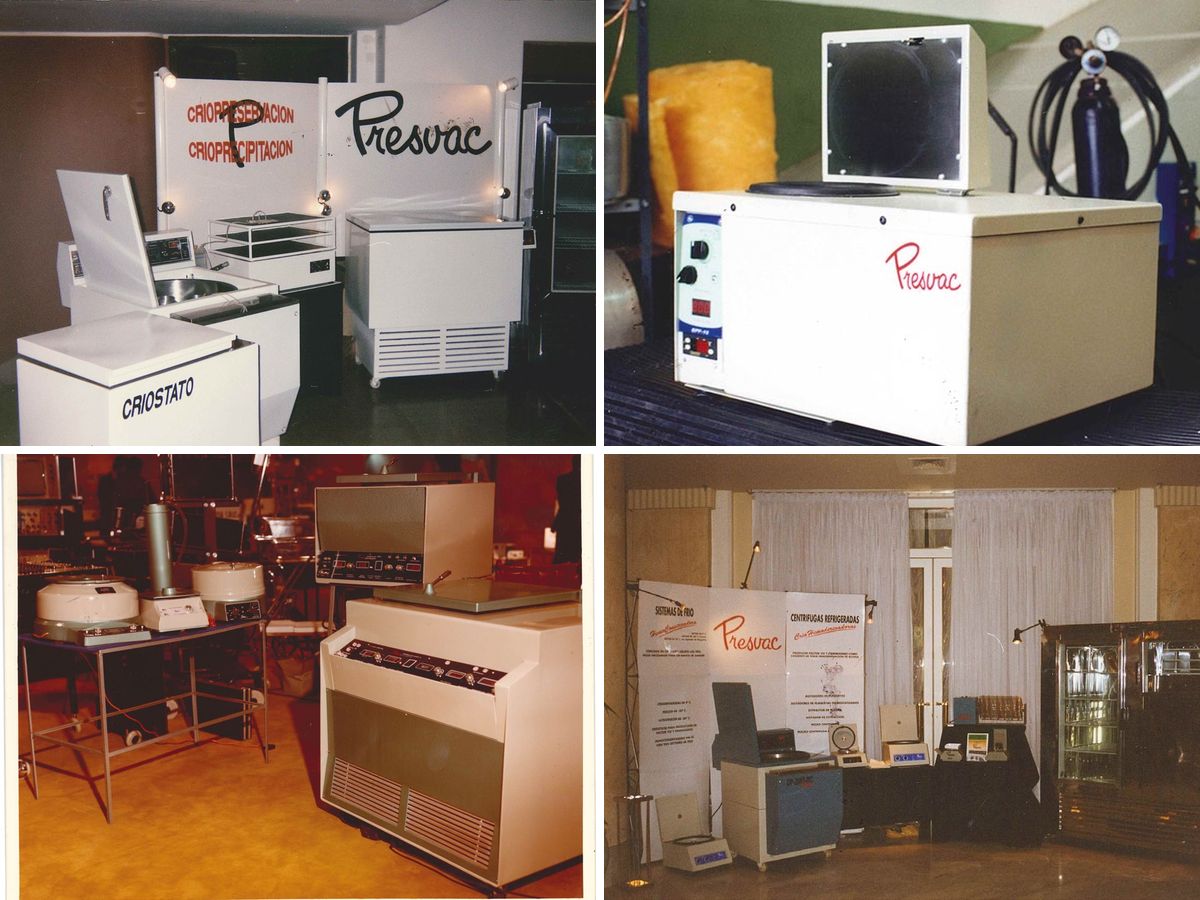

At a glance
- A centrifuge spins samples around a fixed axis so their components separate by density much faster than they would under gravity alone.
- The force on the sample is the relative centrifugal force (RCF), written in × g. It depends on rotor speed (RPM) and on the rotor radius.
- The two main rotor types are swing-out rotors, whose buckets swing to horizontal, and fixed-angle rotors, which hold tubes at a set angle.
- Safe use comes down to three habits: balance the load, respect the rotor's maximum speed and keep the lid closed until the rotor stops.
A centrifuge is a machine that spins samples at high speed to separate their components. Denser particles move outward, toward the bottom of the tube or bag; lighter ones stay closer to the top. Clinical laboratories use centrifuges to separate serum or plasma from blood cells, and blood banks use them to split donated whole blood into components.
How does a centrifuge work?
Left to stand, a blood sample slowly separates on its own: red cells settle to the bottom because they are denser than plasma. This is sedimentation, and under normal gravity it is slow. A centrifuge speeds it up. When the rotor spins, a centrifugal field many times stronger than gravity drives the denser particles away from the axis, so the sample separates into layers much faster.
How fast each particle moves depends on its size, on how much denser it is than the liquid around it and on the viscosity of that liquid. Under the same conditions, larger and denser particles reach the bottom first.
RPM and RCF: speed is not the same as force
RPM (revolutions per minute) tells you how fast the rotor turns. RCF (relative centrifugal force) expresses the centrifugal acceleration on the sample as a multiple of standard gravity, which is why it is written in × g. The rotor radius links the two:
RCF = 1.118 × 10⁻⁵ × r × RPM², with r in centimeters.
Because the radius is part of the formula, two centrifuges at the same RPM can apply very different forces. Force also grows with the square of the speed: double the RPM and the RCF rises four times. That is why laboratory and blood bank procedures give the force in × g, and why moving a procedure to another centrifuge starts by matching the RCF, not the RPM, and then validating the procedure on the new centrifuge. Our RPM to RCF (× g) calculator converts in both directions.
Main parts of a centrifuge
- Motor and drive: turn the rotor. Presvac refrigerated blood bag centrifuges use a brushless induction motor.
- Rotor: holds the samples. Its radius and its maximum speed set the force it can reach.
- Buckets, tube holders and adapters: hold tubes or bags of different sizes in the rotor.
- Chamber and lid: contain the rotor. A lid lock keeps the lid closed while the rotor turns.
- Control panel: sets speed and time and, on programmable models, temperature, acceleration and braking.
- Refrigeration (refrigerated models only): keeps the chamber at the set temperature during the run.
Types of centrifuges
By rotor
- Swing-out (swinging-bucket) rotors. The buckets hang upright at rest and swing out to horizontal as the rotor speeds up. The layers form across the tube or bag and stay well defined. Blood bag centrifuges mainly use swing-out rotors.
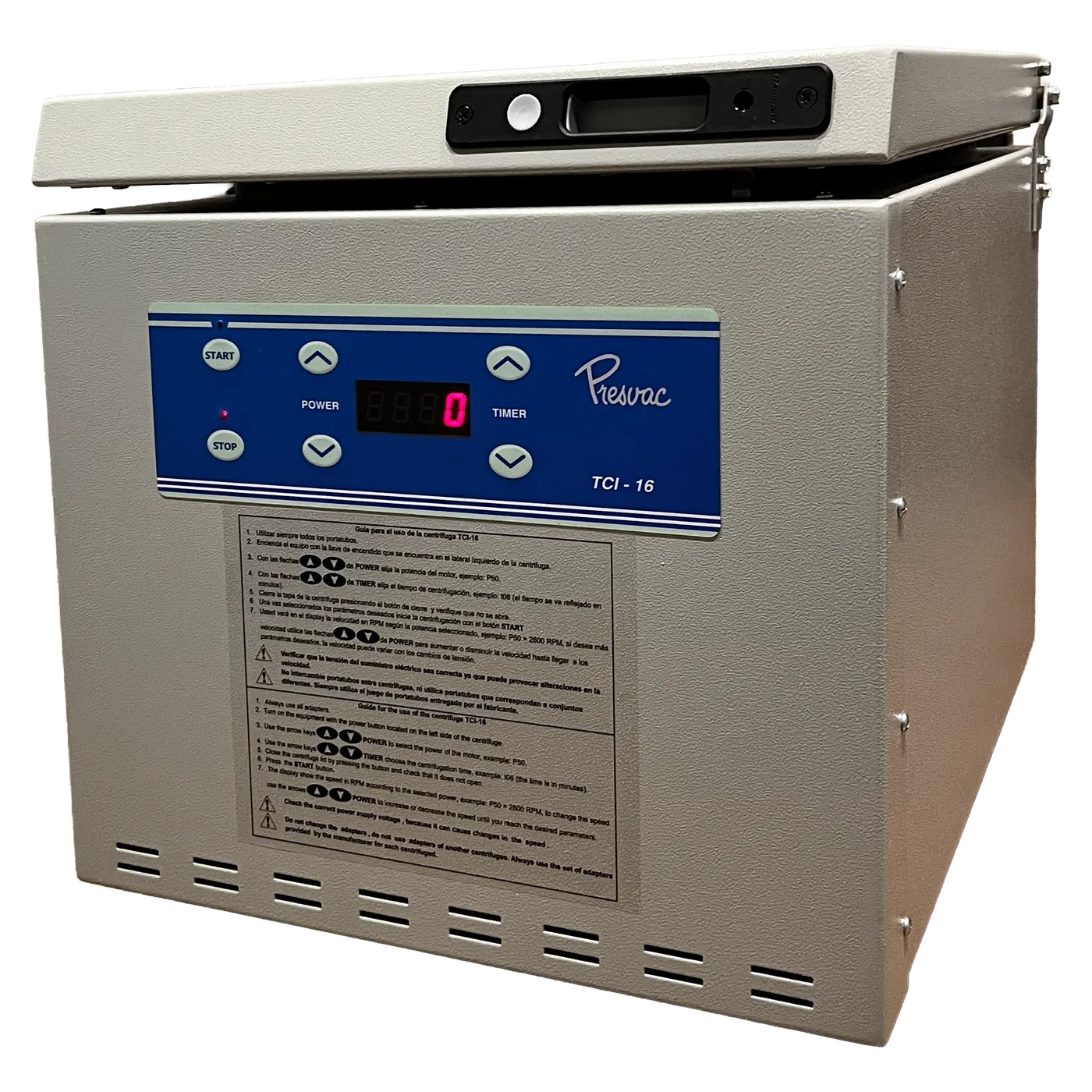
- Fixed-angle rotors. Tubes sit in cavities at a fixed angle. Particles travel a shorter distance and collect against the outer wall and the bottom of the tube. Fixed-angle rotors usually allow higher speeds: on the TCI-16, the swing-out rotors run up to 3,500 RPM and the fixed-angle rotors up to 5,000 RPM, depending on the rotor.
By size
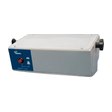
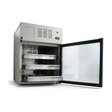
- Benchtop centrifuges sit on a laboratory bench.
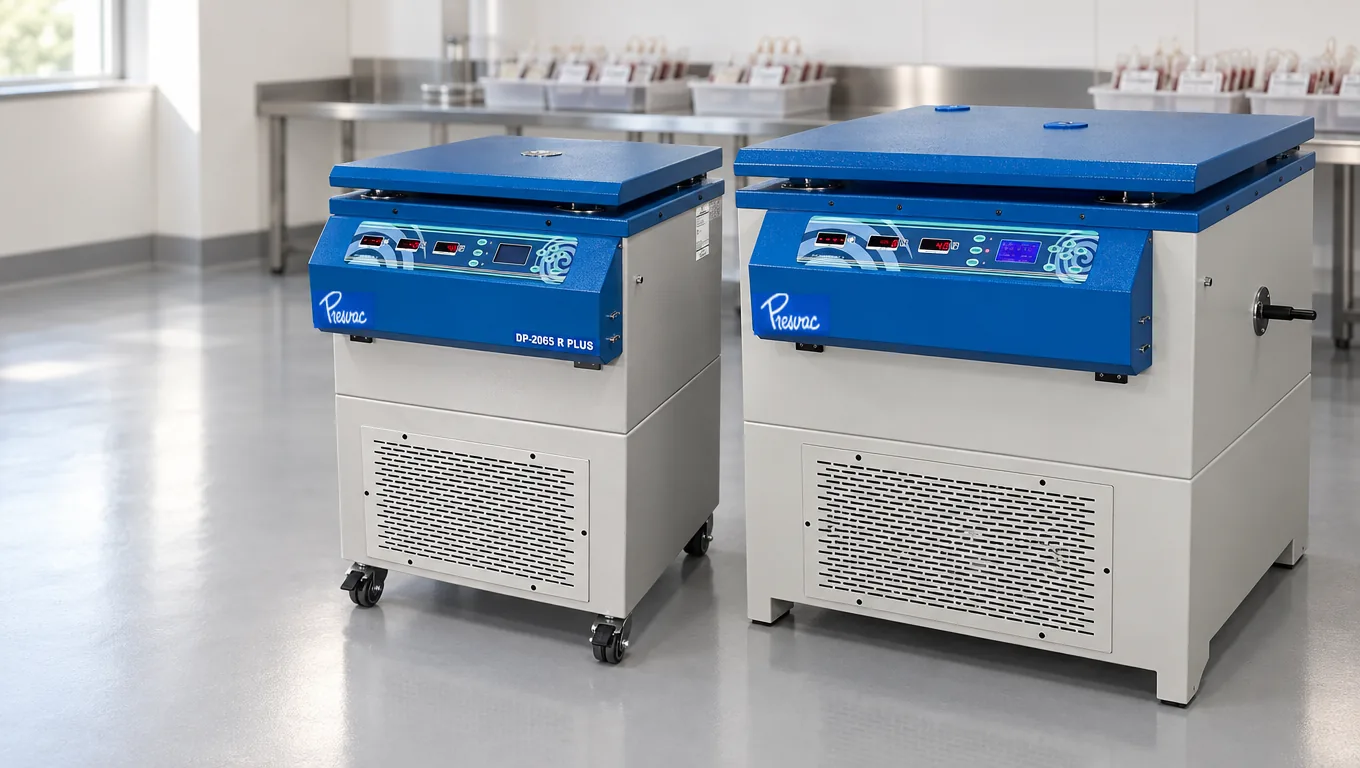
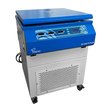
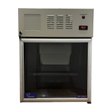
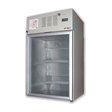
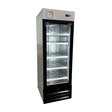
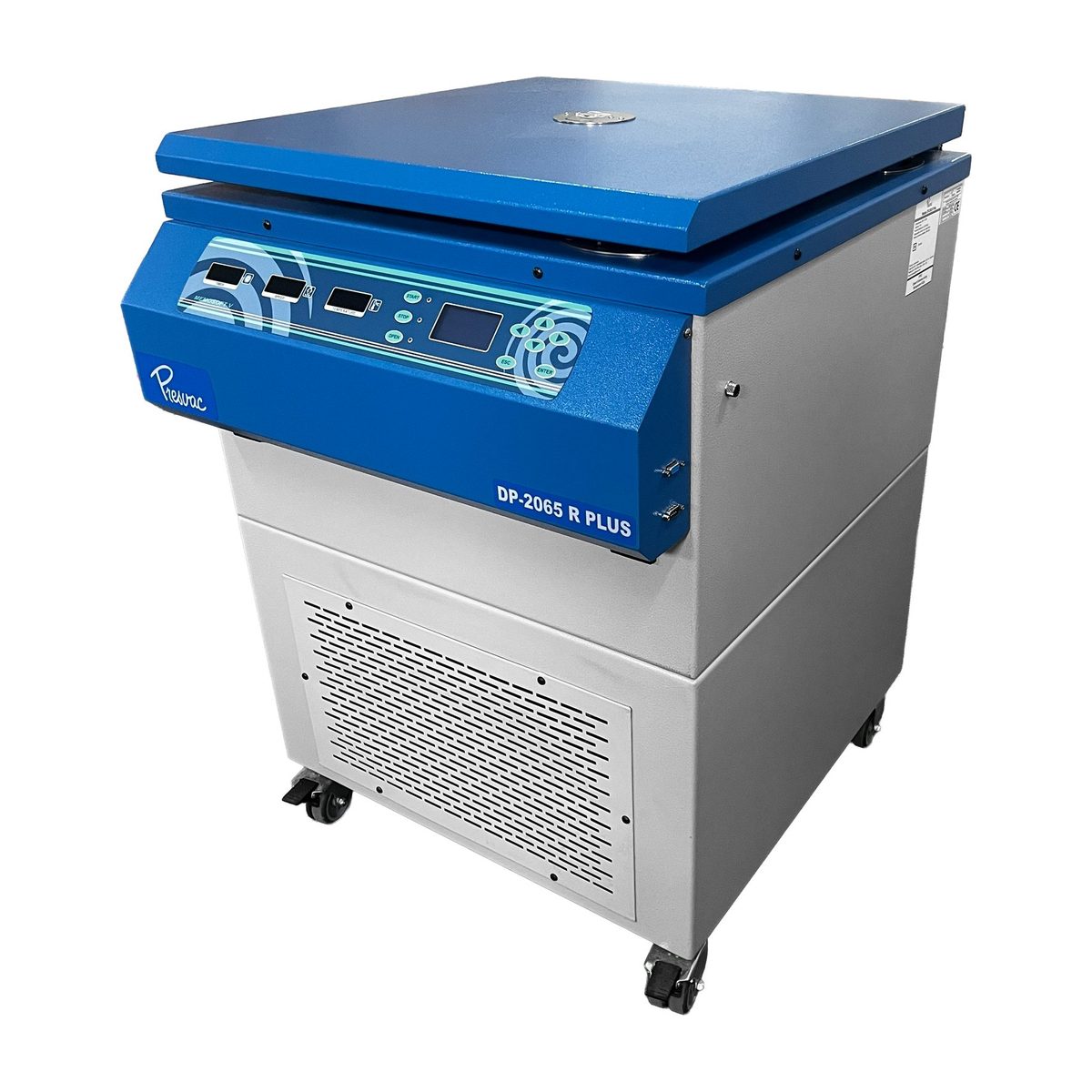
- Floor-standing centrifuges, such as blood bag centrifuges, are installed on the floor.
By temperature control
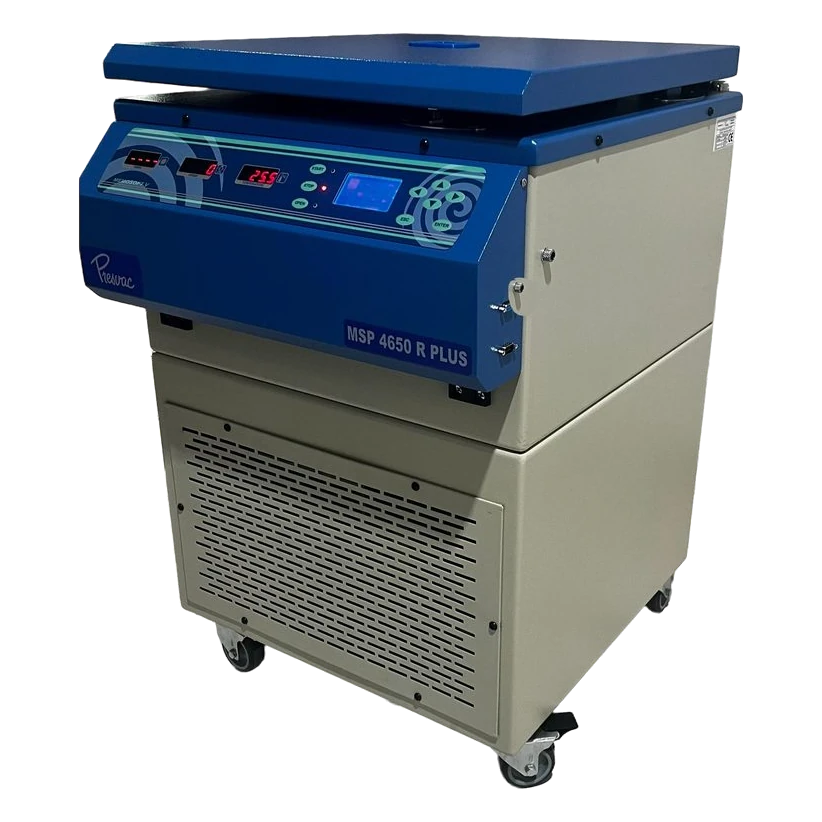
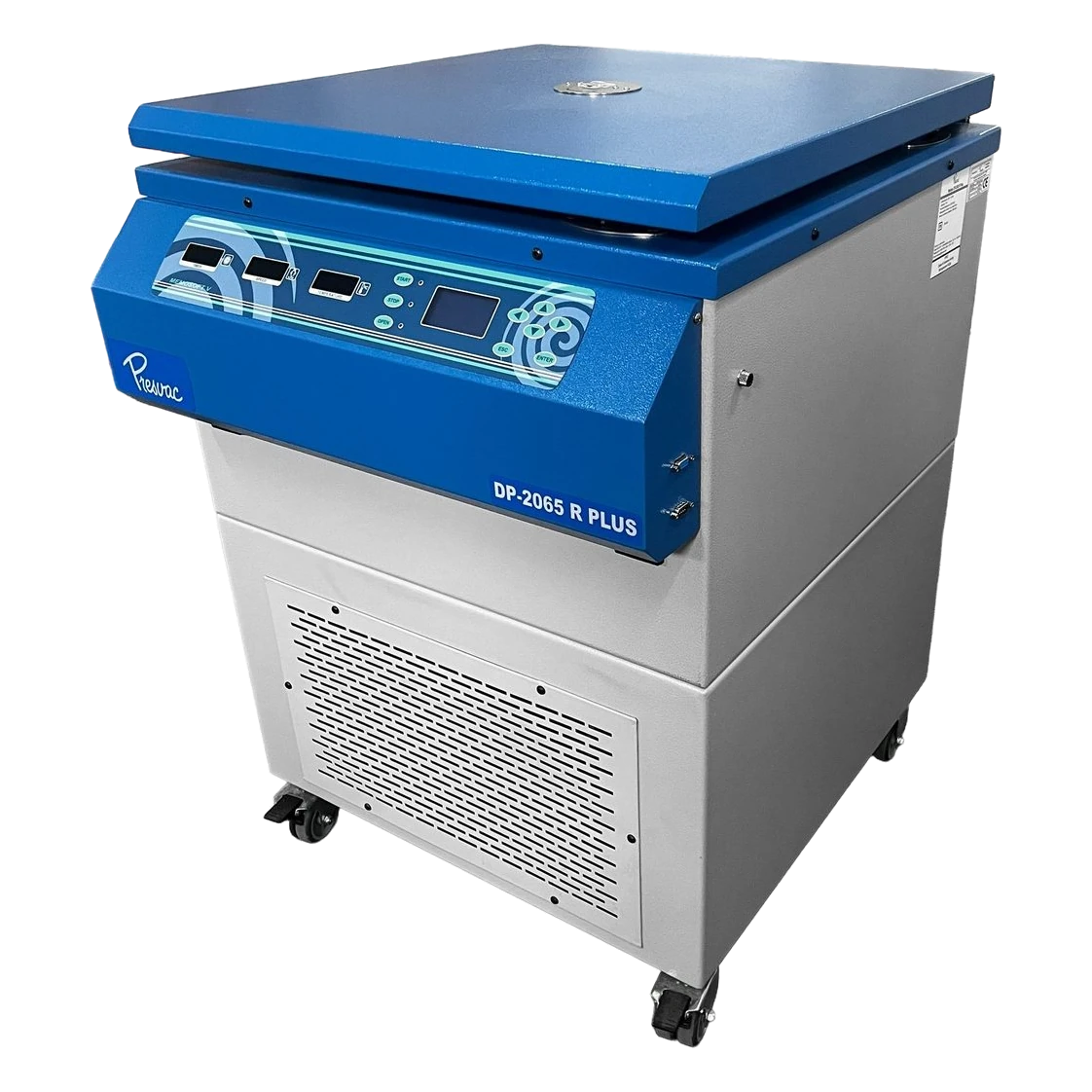
- Refrigerated centrifuges control the chamber temperature during the run. The MSP-4650 R PLUS and the DP-2065 R PLUS are programmable from 4 °C to 40 °C.
- Non-refrigerated centrifuges have no active cooling.
By application
- Clinical and laboratory centrifuges process tubes: serum and plasma separation, routine tests, research and, in blood banks, crossmatch testing.
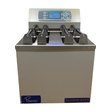
- Blood bag centrifuges process double, triple or quadruple bags of whole blood. They are used to obtain red blood cell concentrate and platelet-rich plasma and, in later processing steps, platelet concentrate and cryoprecipitate.
Why acceleration and braking matter
How the rotor speeds up and slows down also affects the separation. An abrupt stop can stir separated layers back together. Programmable centrifuges let you set acceleration and braking for each procedure: the Presvac MEMOSOFT V panel stores up to 50 protocols with 10 acceleration and braking ramps.
Safe use: the basics
- Balance the load. Place tubes or bags of equal weight opposite each other, following the loading patterns and tolerances in your manual. See How to balance a centrifuge.
- Respect the maximum speed of the rotor, buckets and adapters you use.
- Check tubes, buckets and adapters for cracks or wear before each run.
- Keep the lid closed until the rotor has stopped completely.
- Follow the manual of your centrifuge.
Depending on the model, Presvac centrifuges add lid locking, imbalance detection and alarms.
Presvac centrifuges
Table: The Presvac range
- Model | Type | Capacity | Designed for
- MSP-4650 R PLUS | Refrigerated blood bag centrifuge | 4 bags per cycle | Laboratories and lower-volume centers
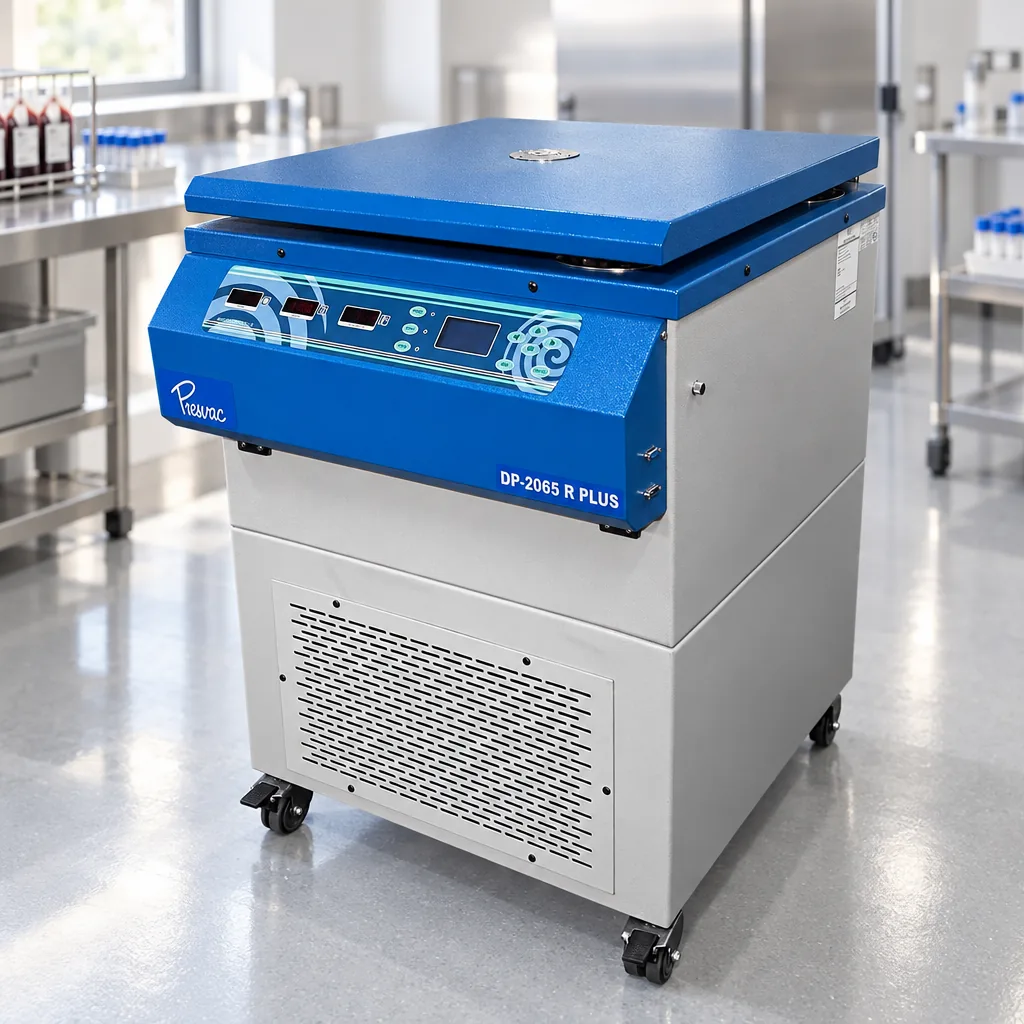
- DP-2065 R PLUS | Refrigerated blood bag centrifuge | 6 bags per cycle | Medium-flow blood banks
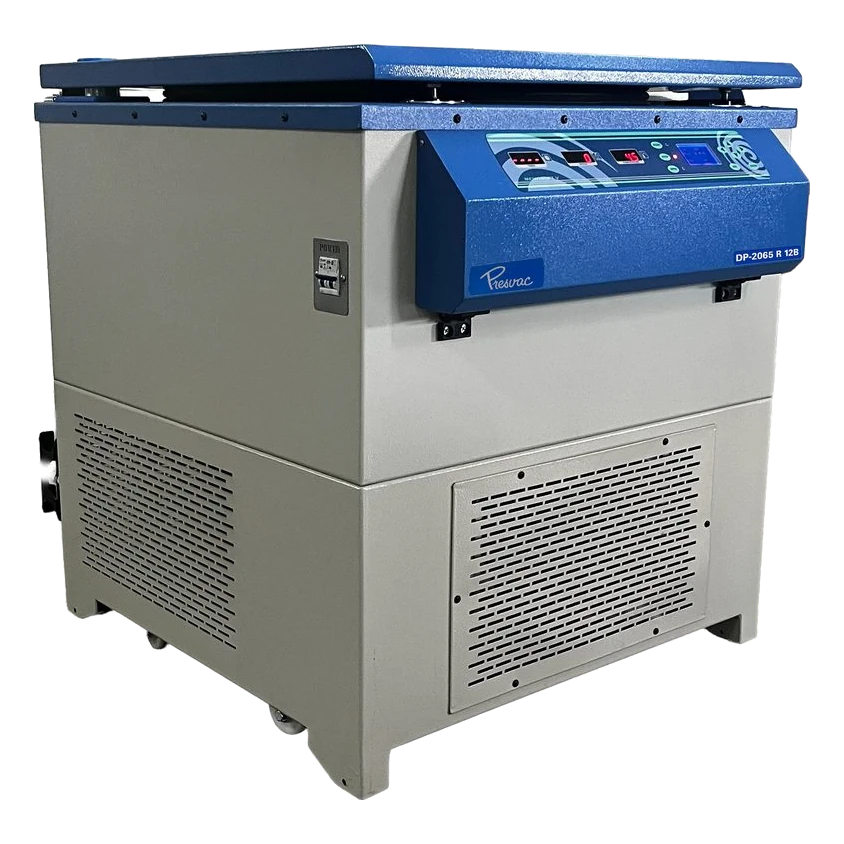
- DP-2065 R 12B | Refrigerated blood bag centrifuge | 12 bags per cycle | High-volume centers
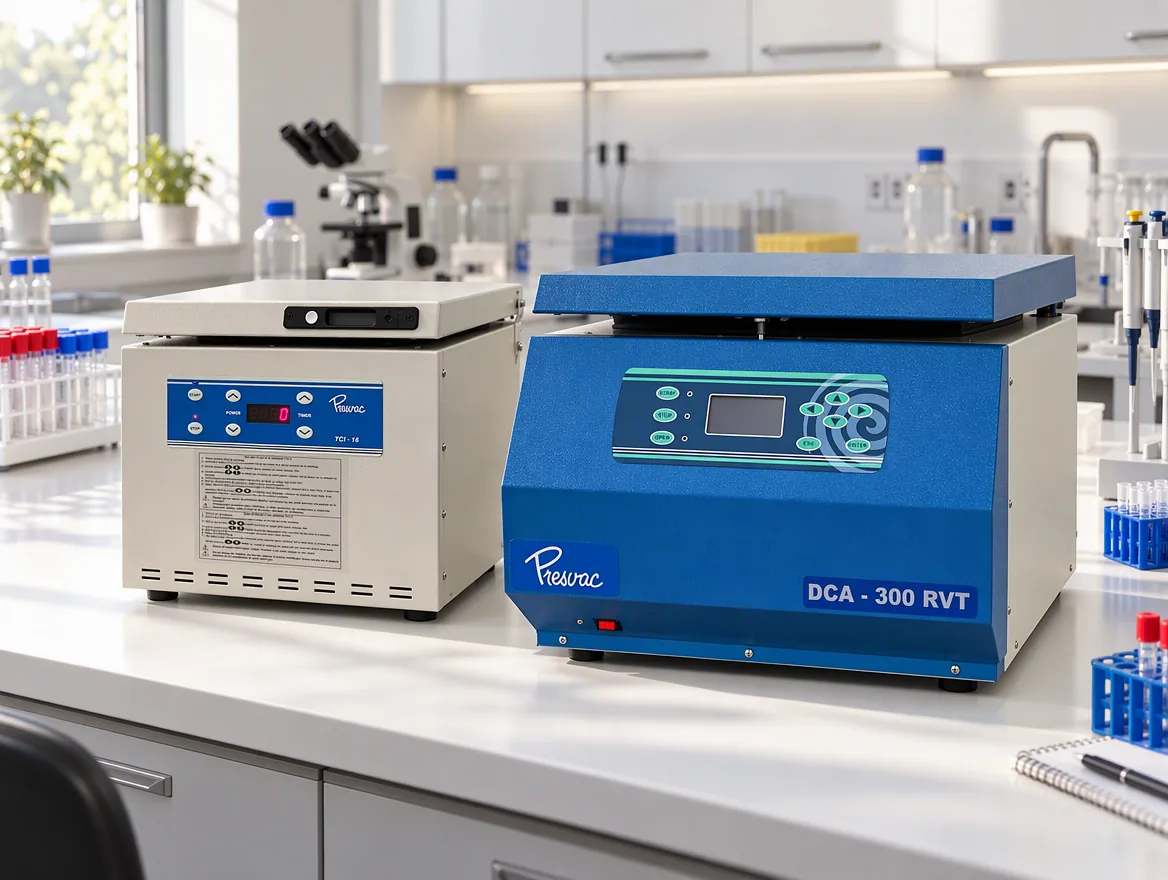
- TCI-16 | Clinical benchtop centrifuge | Up to 36 tubes of 8 mL | Routine clinical work
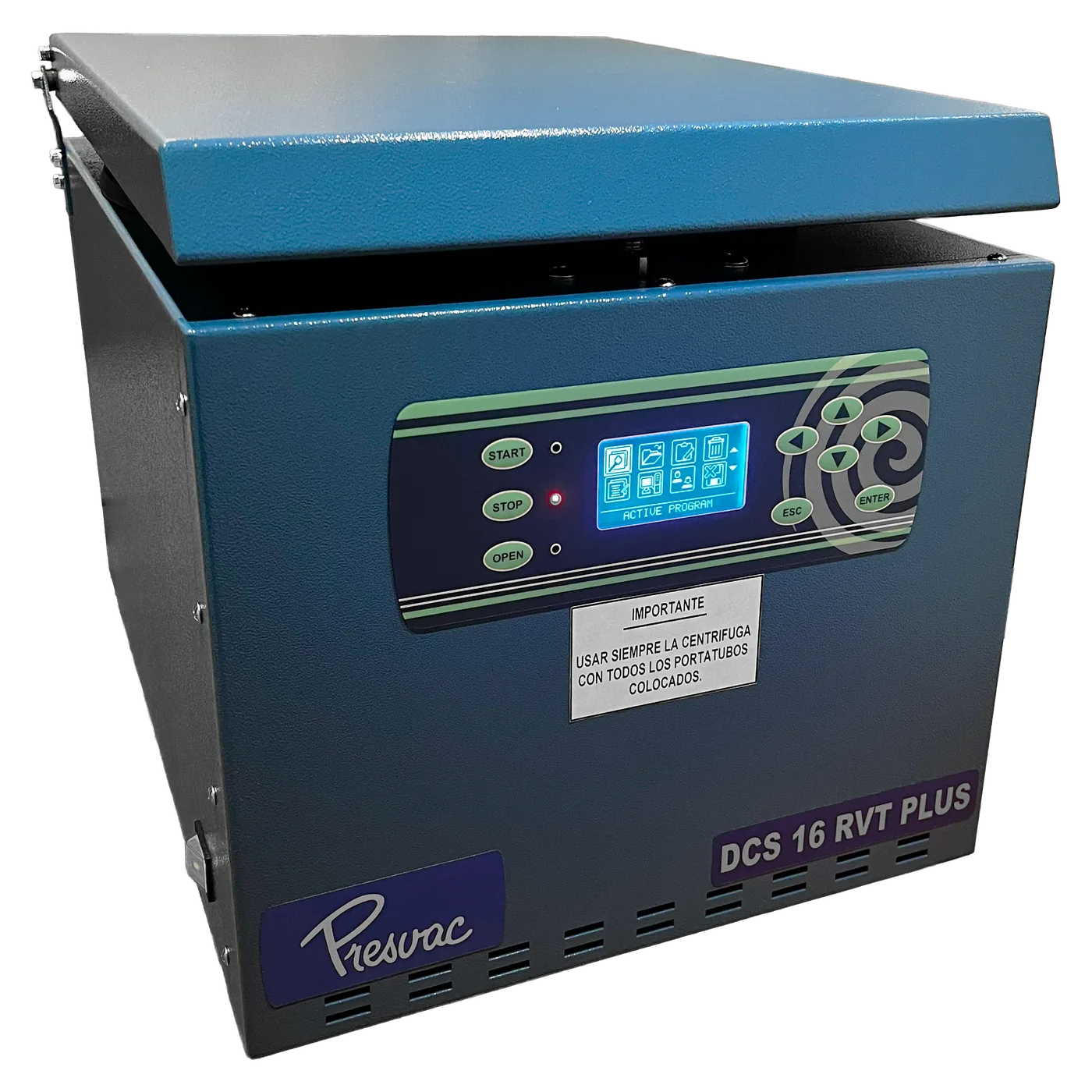
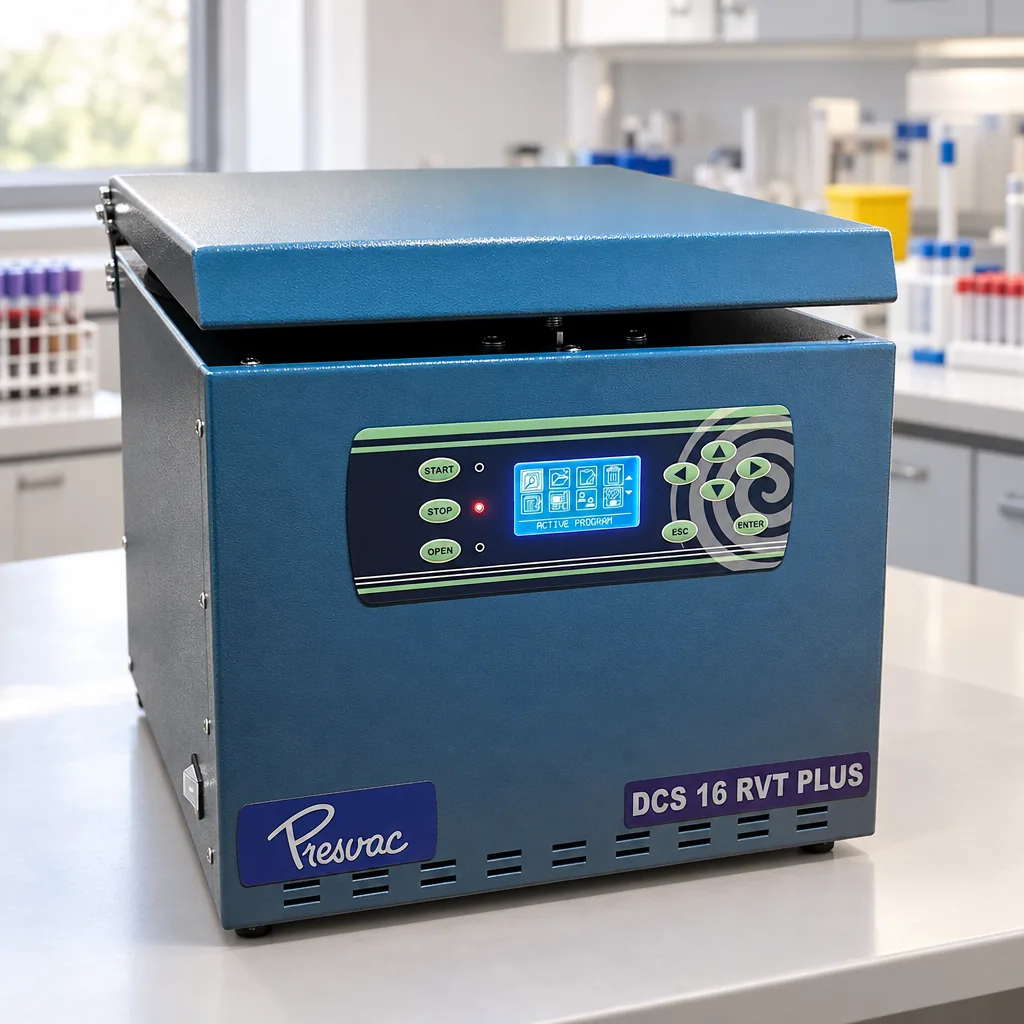
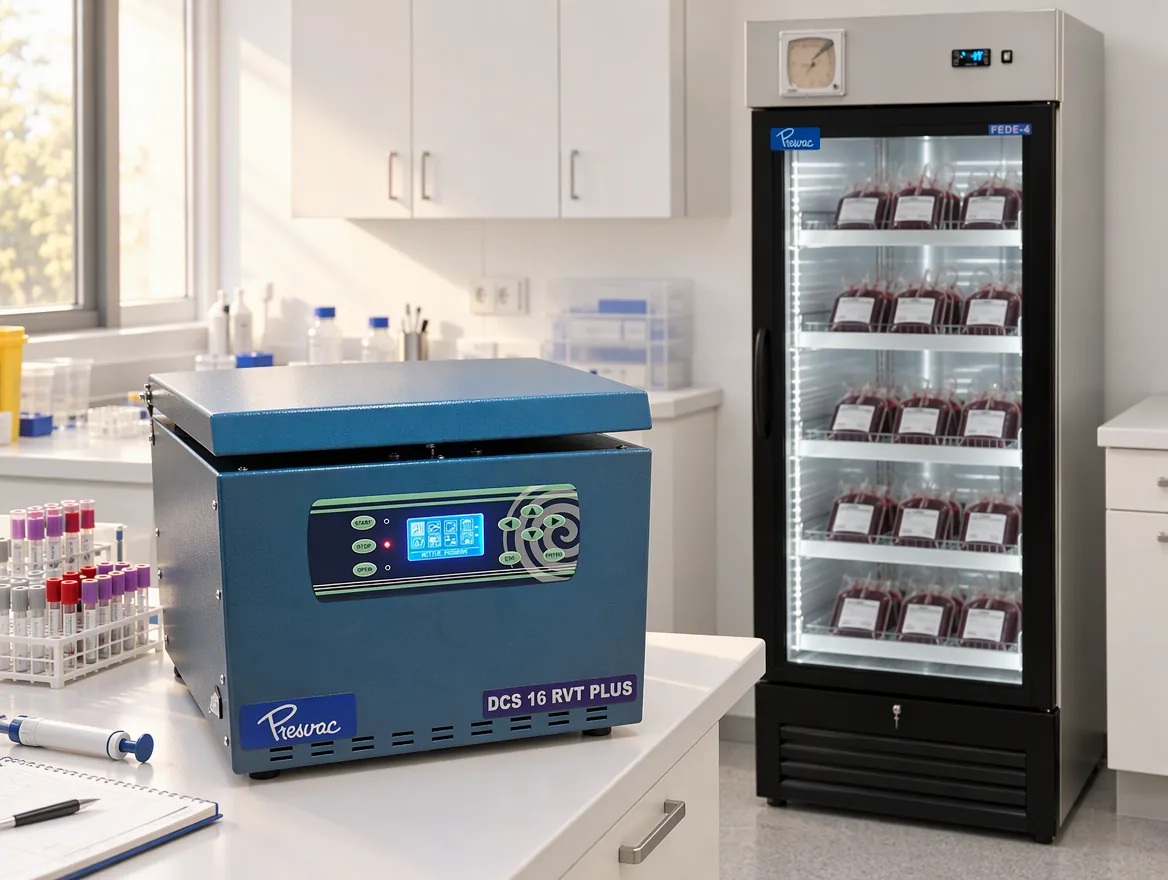
- DCS-16RVT PLUS | Programmable laboratory centrifuge | Up to 36 tubes of 8 mL | Routine work and crossmatch testing
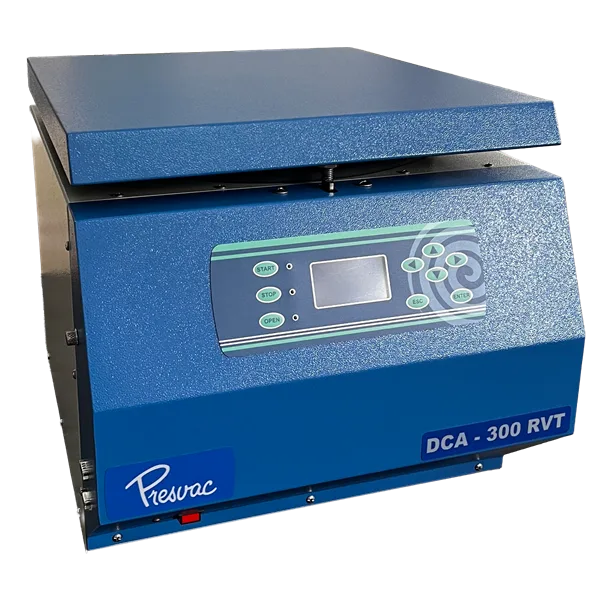
- DCA-300 RVT | High-capacity benchtop centrifuge | 36 tubes of 8 mL with the CF-36 rotor | High-volume laboratories
To go further:
- Choosing a tube centrifuge: Laboratory centrifuges: types and how to choose one
- Separating blood components: Blood centrifuge: how blood components are separated
- Choosing a bag centrifuge: How to choose a blood bag centrifuge
Frequently asked questions
FAQ
What is the difference between RPM and RCF?
RPM is how fast the rotor turns. RCF expresses the centrifugal acceleration on the sample in × g, and it depends on both speed and rotor radius. The RPM to RCF (× g) calculator converts one into the other.
What is a refrigerated centrifuge used for?
It controls the chamber temperature during the run, for example when blood components are processed. The MSP-4650 R PLUS and the DP-2065 R PLUS are programmable from 4 °C to 40 °C.
What is the difference between a swing-out and a fixed-angle rotor?
In a swing-out rotor the buckets turn horizontal while spinning, so the layers form across the tube or bag. In a fixed-angle rotor the tubes stay at a set angle, particles travel a shorter distance and the rotor usually reaches higher speeds.
Is a blood bank centrifuge the same as a laboratory centrifuge?
No. A blood bag centrifuge is a refrigerated floor-standing unit with a swing-out rotor for blood bags. A laboratory centrifuge is usually a benchtop unit for tubes.
Do you provide installation and training?
Yes. Presvac installs the equipment, trains the users and helps plan preventive and corrective maintenance.
Not sure which centrifuge fits your work? See all Presvac centrifuges or request a quote.