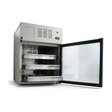
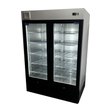
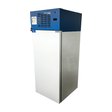
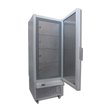


At a glance
- "Blood centrifuge" covers two kinds of equipment: tube centrifuges for blood samples in the laboratory, and blood bag centrifuges that separate donated whole blood into components in the blood bank.
- Centrifugation separates anticoagulated whole blood by density: red cells go to the bottom, plasma stays on top, and a thin layer of white cells and platelets, the buffy coat, forms between them.
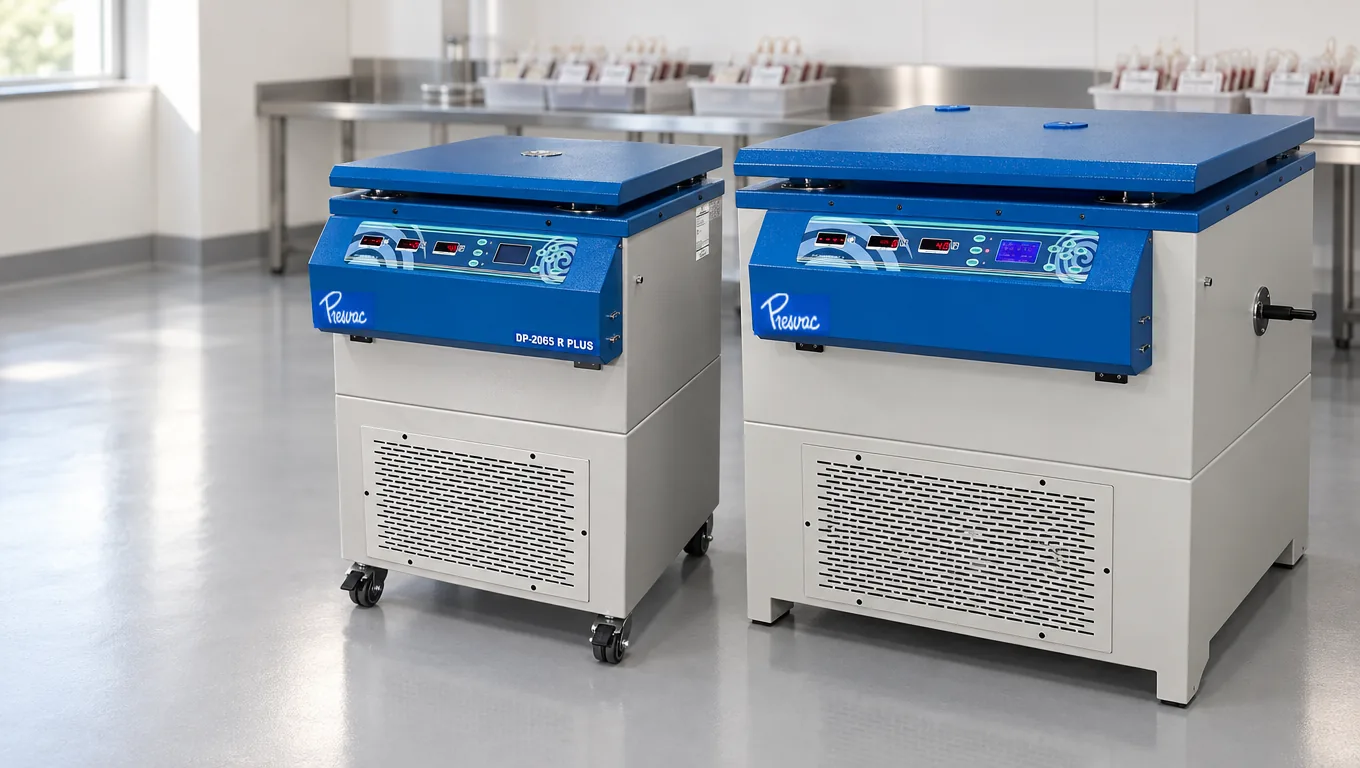
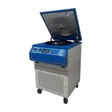
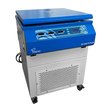
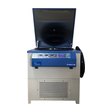
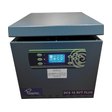
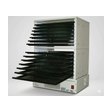
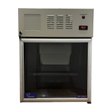
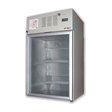
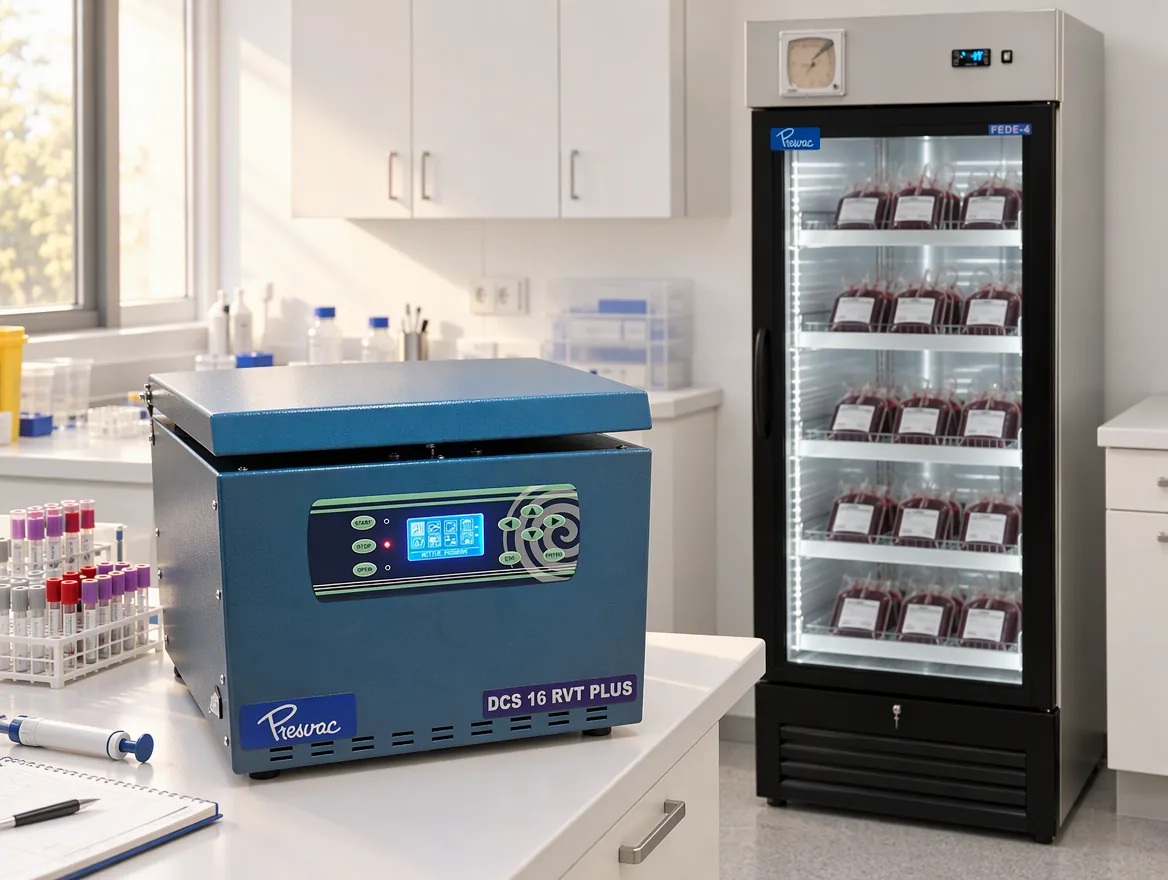
- A blood bag centrifuge processes double, triple or quadruple bags. It is used to obtain red blood cell concentrate and platelet-rich plasma, in later steps to obtain platelet concentrate and cryoprecipitate, and in buffy coat processing.
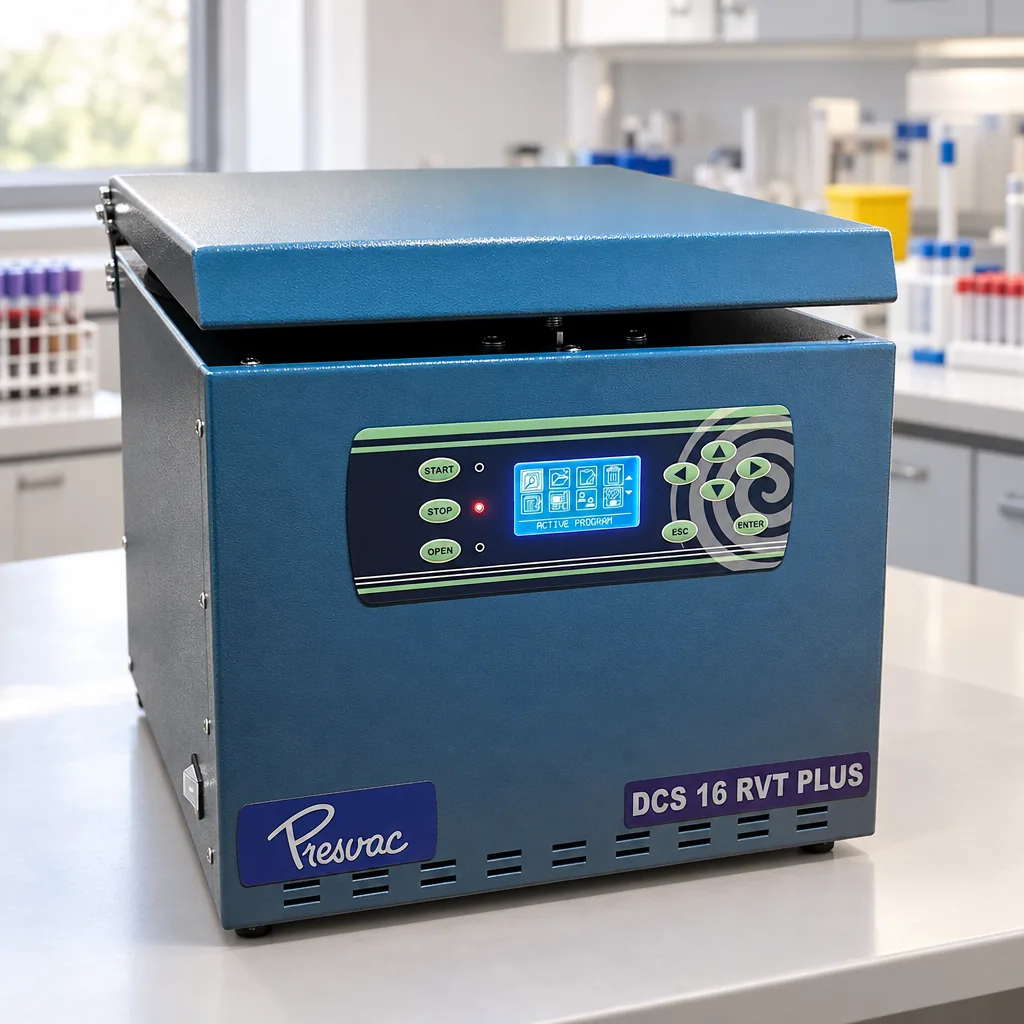
- Each blood bank validates its own procedures. Stored programs make it easier to run them the same way every time: MEMOSOFT V stores up to 50 protocols with 10 acceleration and braking ramps.
- The Presvac range processes 4, 6 or 12 bags per cycle.
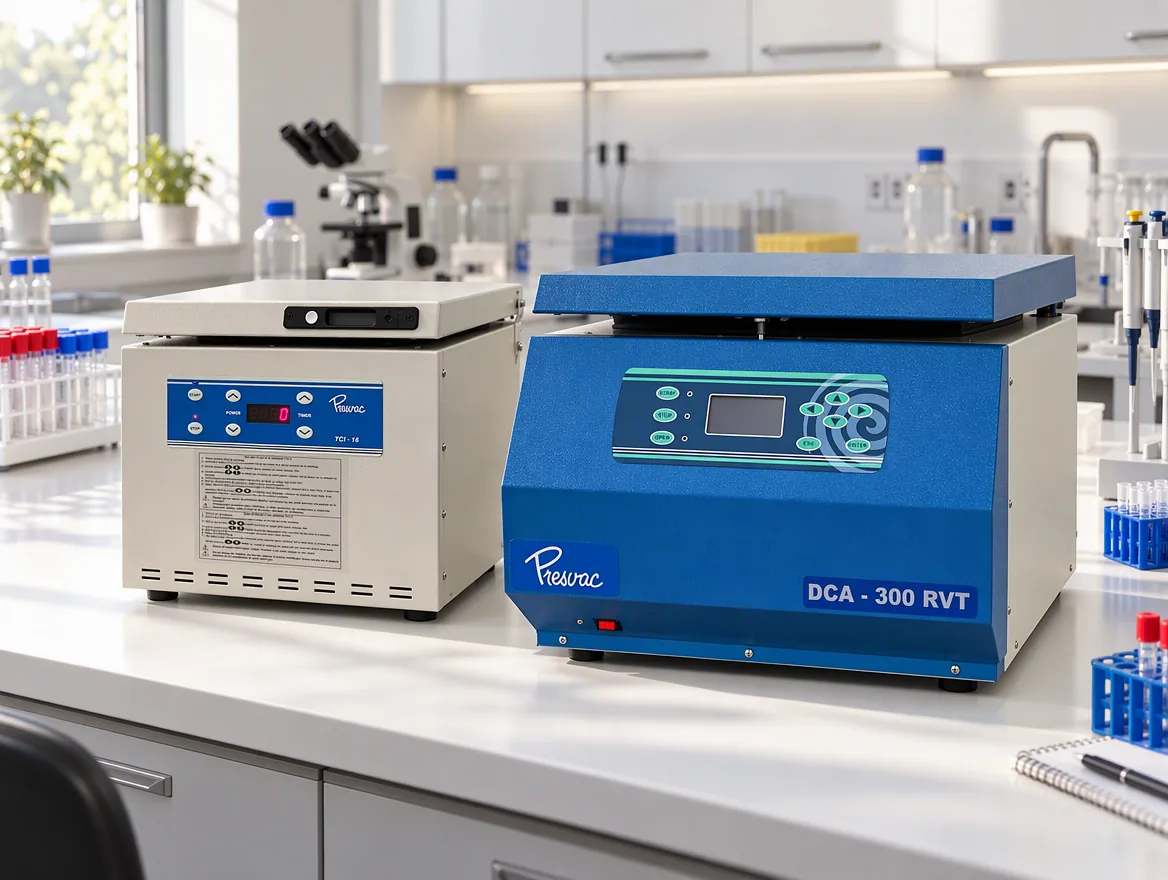
A blood centrifuge spins blood so that its components separate by density. In the laboratory, tube centrifuges separate serum or plasma from blood samples for testing. In the blood bank, refrigerated blood bag centrifuges separate each donation of whole blood into components for transfusion. This guide explains how that separation works and what to look for in a blood bag centrifuge. For tube centrifuges, see Laboratory centrifuges: types and how to choose one.
How centrifugation separates blood
Whole blood, collected with anticoagulant, is a mix of cells suspended in plasma. When it spins, the densest part, the red cells, moves to the bottom of the bag or tube. Plasma, the lightest, stays on top. Between them forms a thin layer of white cells and platelets: the buffy coat. Depending on the settings, platelets stay in the plasma, as platelet-rich plasma, or collect in the buffy coat.
The force in × g, the time, the temperature and the acceleration and braking decide how clean that separation is. Each blood bank sets these values in its validated procedures.
From whole blood to components
- Whole blood is collected in a double, triple or quadruple bag system: a main bag connected to empty satellite bags.
- The bag system is centrifuged and the blood separates into layers. Some components, such as platelet concentrate and cryoprecipitate, need further processing steps.
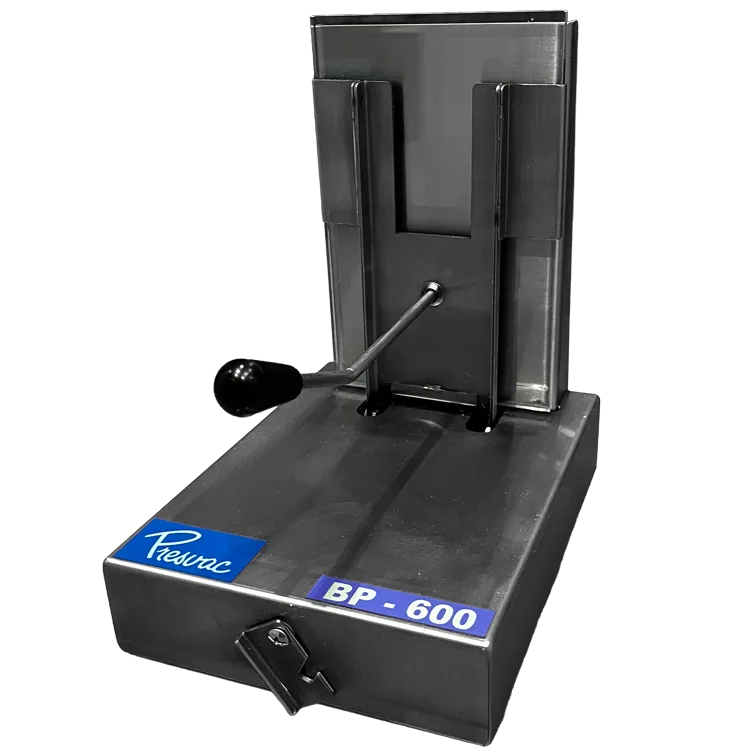
- The plasma is expressed into a satellite bag with a plasma extractor, such as the Presvac BP-600, without opening the system.
- Each component goes to its own storage: red cells to a blood bank refrigerator, plasma to a plasma freezer and platelets to a platelet agitator and incubator.
Presvac blood bag centrifuges are used in the processing of:
- Red blood cell concentrate
- Platelet-rich plasma
- Platelet concentrate
- Cryoprecipitate
- Buffy coat processing
What to look for in a blood bag centrifuge
- Capacity per cycle. Count the bags you process at peak. The Presvac range takes 4, 6 or 12 bags per cycle.
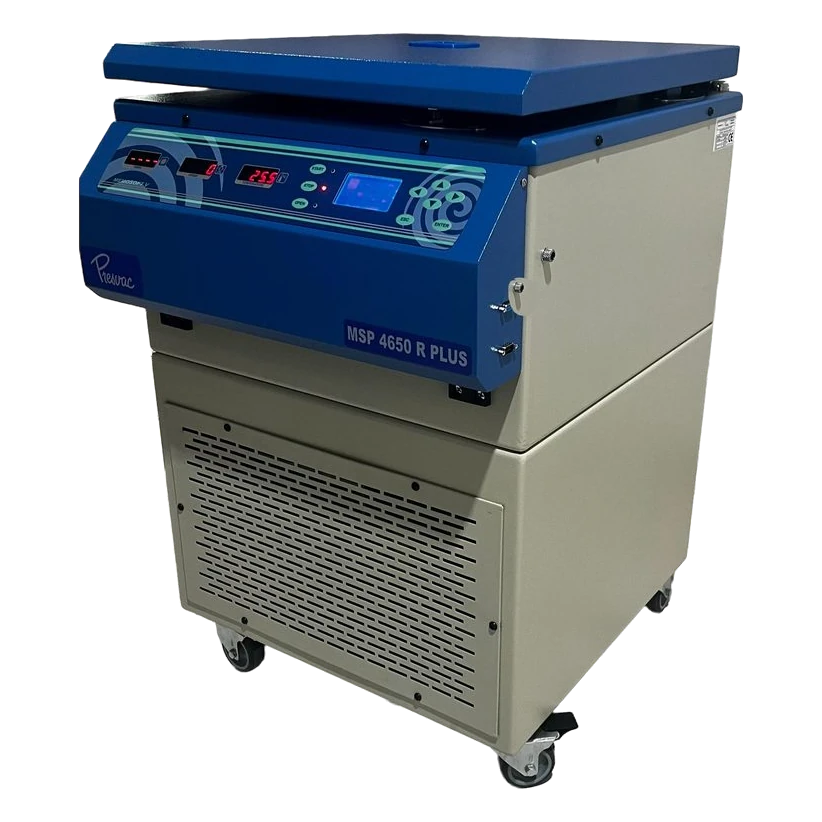
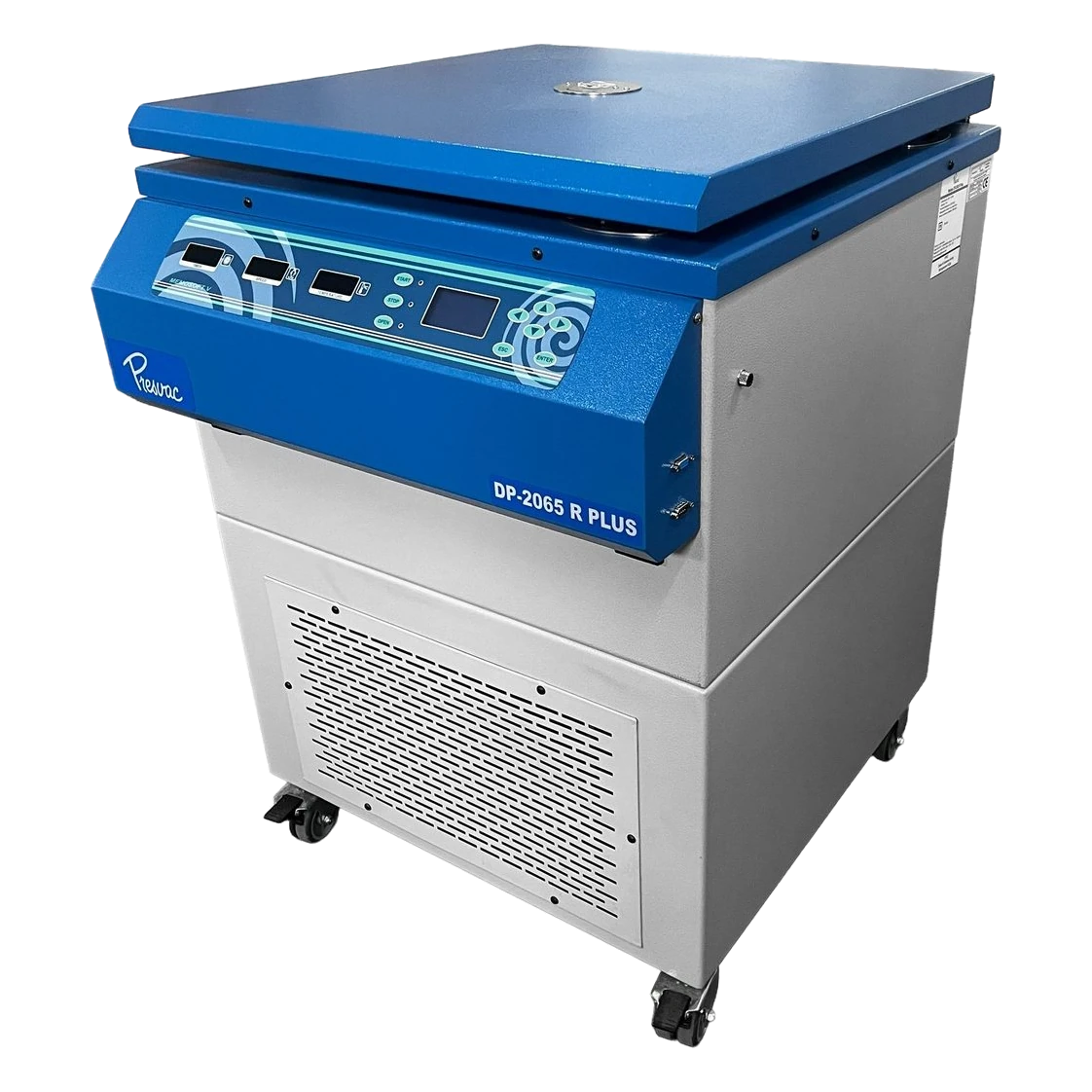
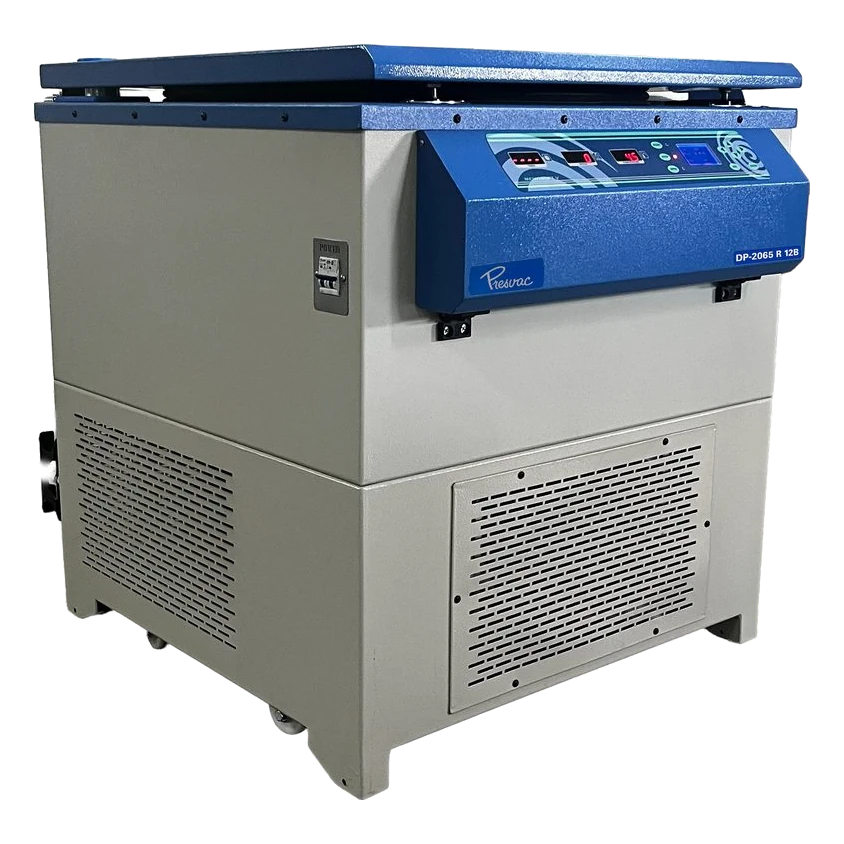
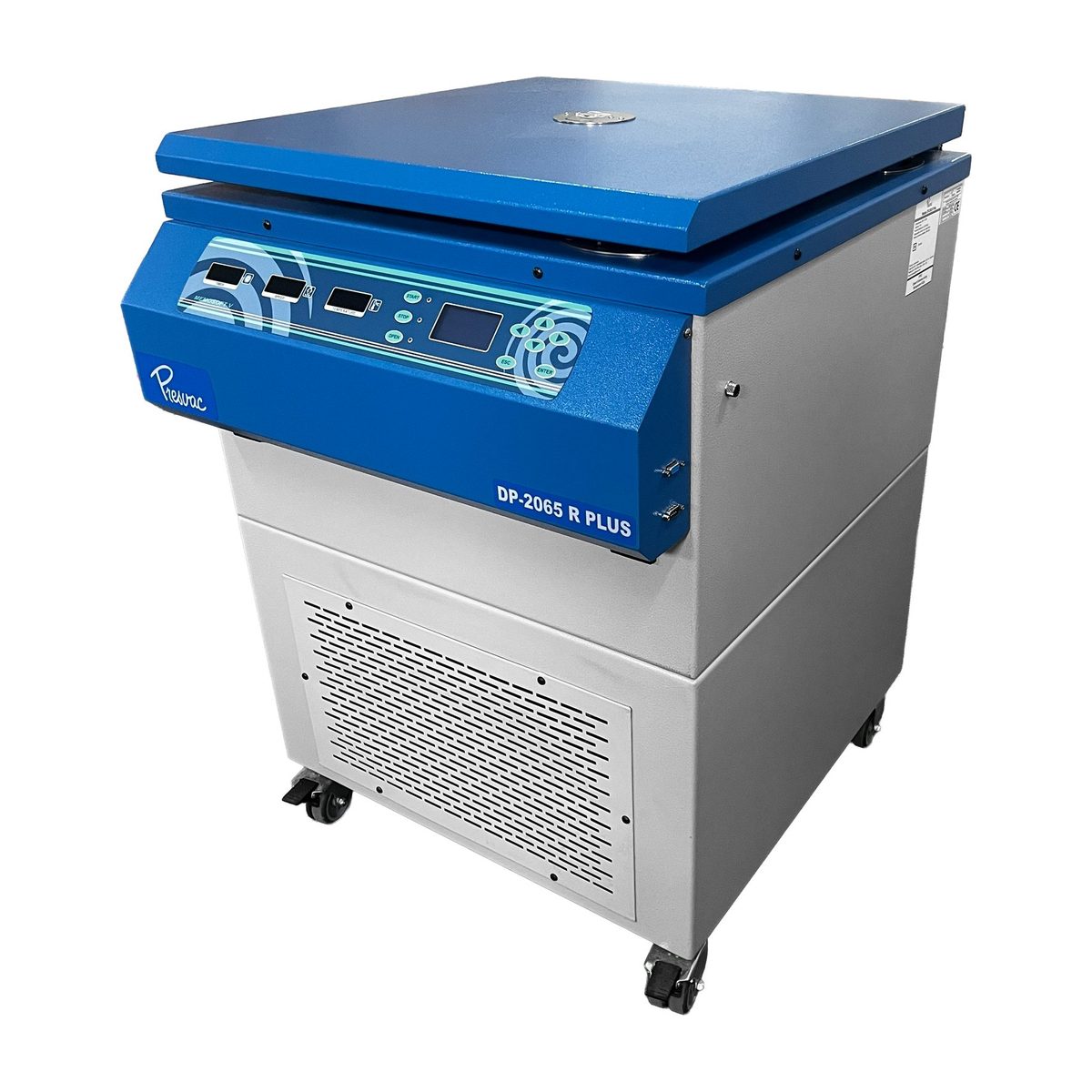
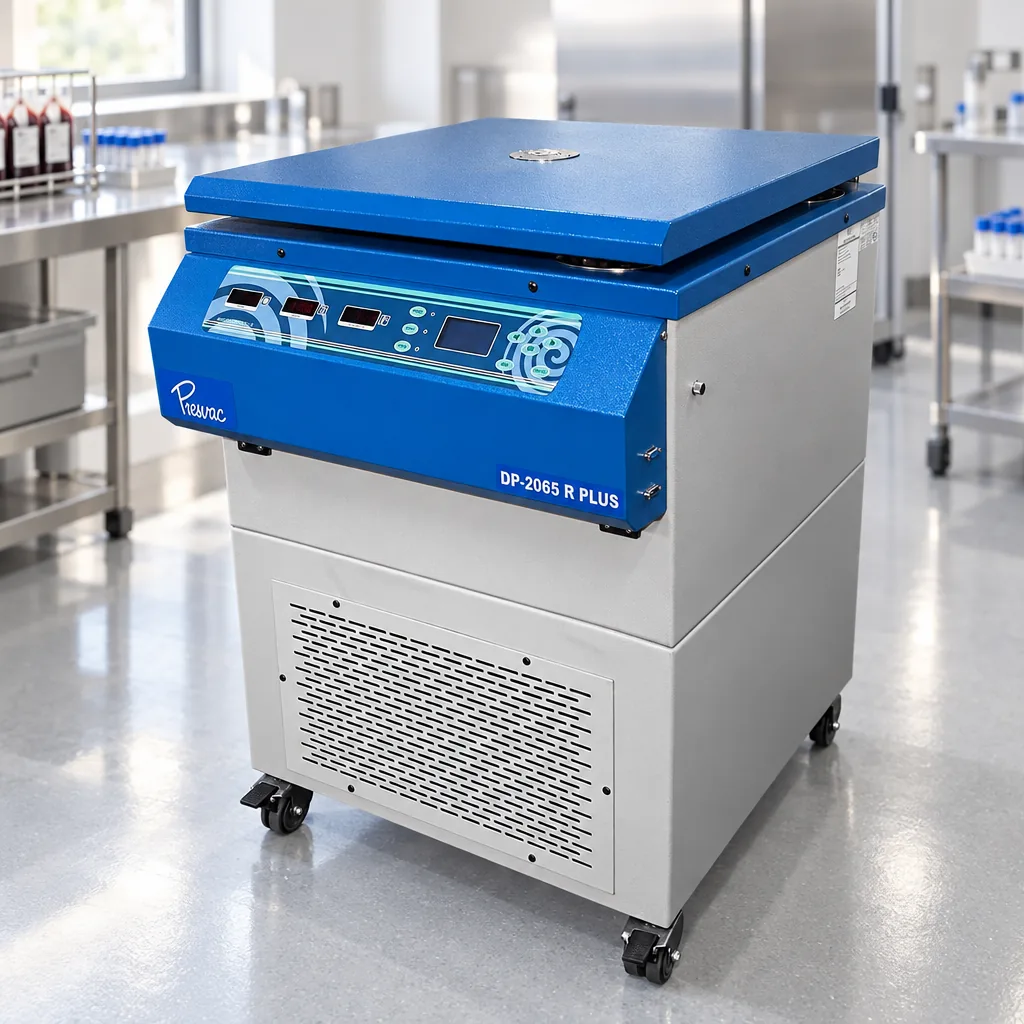
- Swing-out rotor and buckets for your bags. Bags spin inside buckets that swing to horizontal. The MSP-4650 R PLUS and the DP-2065 R PLUS take 4 or 6 bags in 1,000 mL bag holders; the DP-2065 R 12B takes 12 bags of 500 mL in 2,400 mL holders.
- Refrigeration. The MSP-4650 R PLUS and the DP-2065 R PLUS are programmable from 4 °C to 40 °C (±6 °C), and the DP-2065 R PLUS reaches 4 °C in 15 minutes.
- Controlled acceleration and braking. Gentle starts and stops keep the separated layers in place. MEMOSOFT V offers 10 programmable ramps.
- Stored protocols. MEMOSOFT V stores up to 50 protocols, so every operator runs each procedure with the same settings.
- Traceability. MEMOSOFT V records the date, time, method and duration of every cycle, exports the data to a PC and works with an optional barcode reader to identify each unit. User groups, user identification and screen lock control who can change settings.
- Safety. Real-time imbalance detection; voltage, temperature, speed, imbalance, missing-rotor, brake and motor alarms; and an anti-vibration lid lock with emergency opening.
- Buffy coat adapters, available as an option on all three models.
Presvac blood bag centrifuges
Table: Blood bag centrifuges
- Model | Bags per cycle | Max. speed | Weight | Designed for
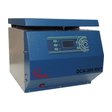
- MSP-4650 R PLUS | 4 | 3,500 RPM | 147 kg | Laboratories and lower-volume centers
- DP-2065 R PLUS | 6 | 3,500 RPM | 207 kg | Medium-flow blood banks
- DP-2065 R 12B | 12 | 4,000 RPM (swing-out rotors) · 7,500 RPM (R6A fixed-angle rotor) | 317 kg | High-volume centers
To size the right model, read How to choose a blood bag centrifuge and the Blood bag centrifuge comparison.
Frequently asked questions
FAQ
What is the buffy coat?
The thin layer of white cells and platelets that forms between the red cells and the plasma after centrifugation. Presvac blood bag centrifuges take optional buffy coat adapters.
Why does a blood bag centrifuge need refrigeration?
To control the temperature of the bags during the run, as each procedure requires. The MSP-4650 R PLUS and the DP-2065 R PLUS are programmable from 4 °C to 40 °C.
Can I use the same settings on a different centrifuge?
Not directly. A different rotor radius gives a different force at the same RPM. Match the force in × g with the RPM to RCF (× g) calculator, then validate the whole procedure on the new centrifuge.
Do you provide installation and training?
Yes. Presvac installs the equipment, trains the users and helps plan preventive and corrective maintenance.
New to centrifugation? Start with What is a centrifuge and how does it work? See all Presvac centrifuges or request a quote.