




CENTRIFUGE CALCULATOR
RPM to RCF (× g) calculator for centrifuges
Convert rotor speed (RPM) to relative centrifugal force (RCF, × g) and back. Enter the rotor radius and the result updates as you type.
How the calculator works
Relative centrifugal force (RCF) is the force acting on the sample, expressed as a multiple of the Earth's gravity. That is why it is written as × g. It depends on two values: the rotor speed and the radius at which the sample spins.
Here r is the rotor radius in centimeters. With the radius in millimeters the constant becomes 1.118 × 10⁻⁶. The constant is (2π/60)² divided by standard gravity, 980.665 cm/s²; the calculator uses the unrounded value.
Why protocols give RCF, not RPM
Two centrifuges running at the same RPM can apply very different forces if their rotors have different radii. RCF grows with the square of the speed and in proportion to the radius: doubling the speed multiplies the force by four. That is why laboratory and blood bank protocols state the force in × g, and why you match the RCF, not the RPM, when you move a protocol to another centrifuge or rotor. Whatever the calculation gives, never exceed the maximum speed rated for the rotor, buckets and adapters in use, and always balance the load.
How to measure the rotor radius
Use the maximum radius (r max): the distance from the rotor axis to the bottom of the tube or bag while it spins. In a swing-out (swing bucket) rotor the bucket swings out to a horizontal position during the run, so measure it in that position. In a fixed-angle rotor, measure to the bottom of the tube cavity. If you use adapters, subtract the thickness of the adapter's base. The centrifuge or rotor manual usually gives r max.
Worked examples
Blood bag centrifugation
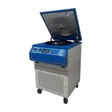
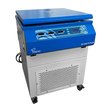
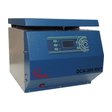
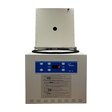
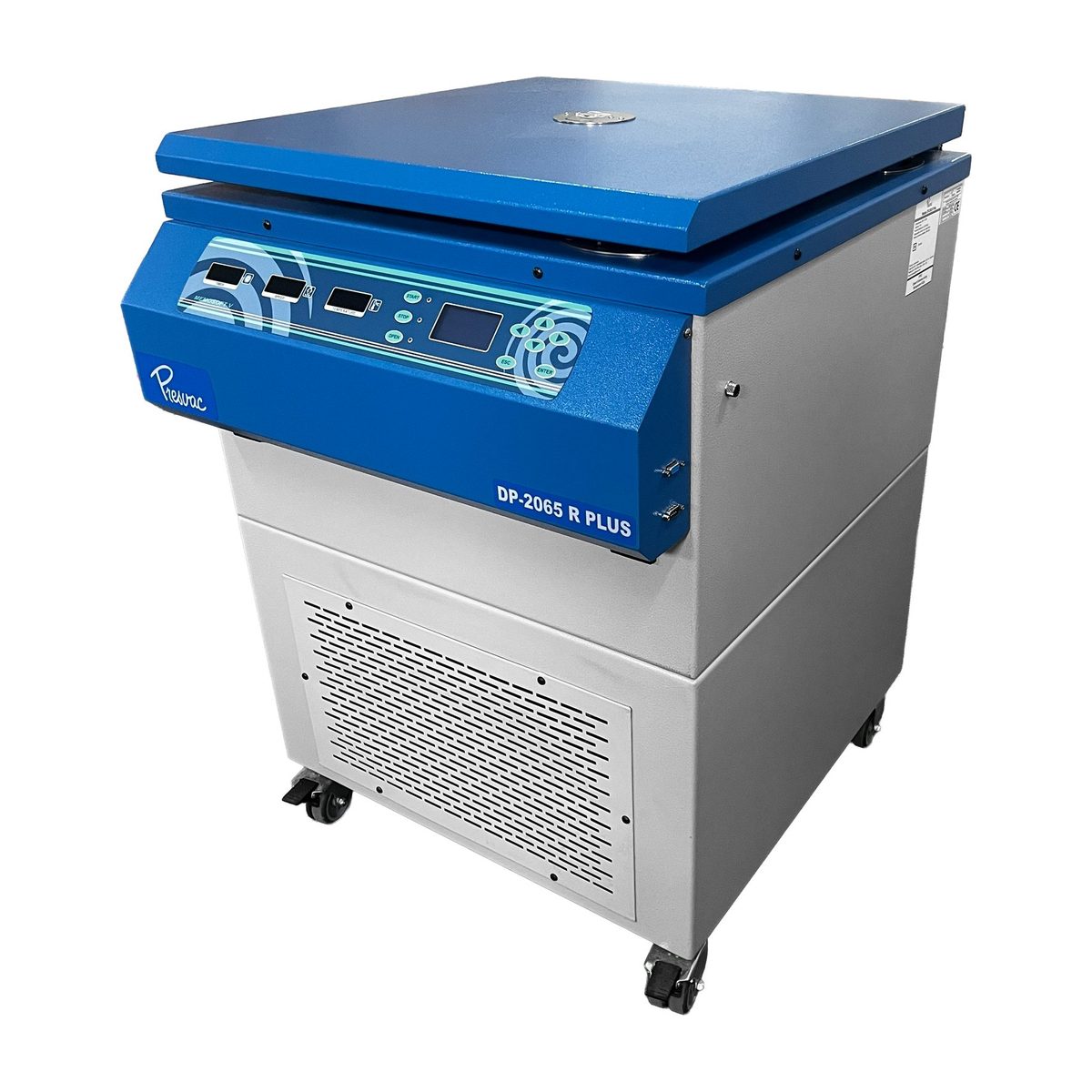
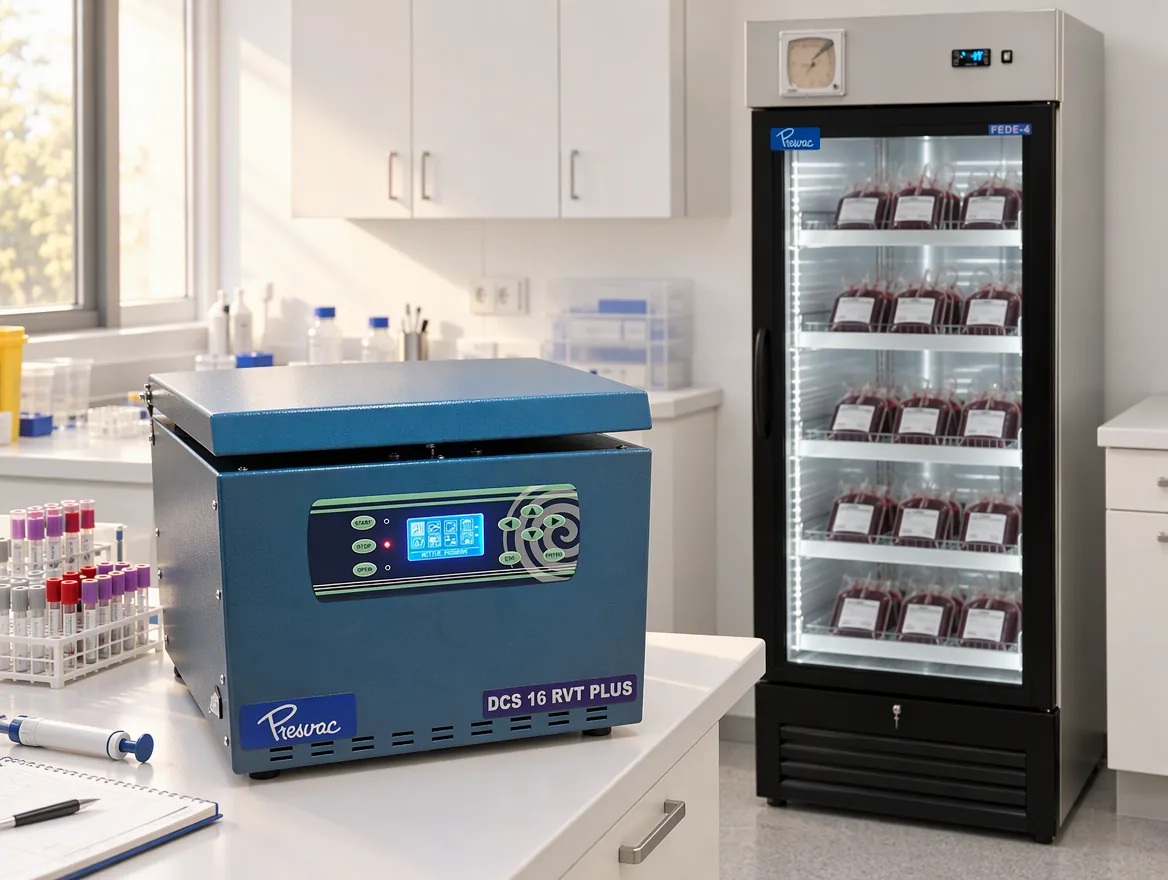
The calculator gives the force at constant speed. Blood component protocols for bag centrifuges also depend on the acceleration and braking profiles, and each blood bank validates them for its own centrifuge, bags and method. When you change centrifuge, match the RCF and the run time, then validate the result. Presvac refrigerated blood bag centrifuges store up to 50 protocols and 10 acceleration and braking ramps. With its 12-bag rotor, the DP-2065 R 12B reaches 4,000 RPM.
Frequently asked questions
How do I convert RPM to g?
Multiply 1.118 × 10⁻⁵ by the rotor radius in centimeters and by the square of the speed. For example, a 15 cm rotor at 3,000 RPM gives 1.118 × 10⁻⁵ × 15 × 3,000² ≈ 1,510 × g.
What does RCF stand for?
Relative centrifugal force: the force on the sample expressed as a multiple of gravity (g).
Is 500 RCF the same as 500 × g?
Yes. RCF is expressed in units of g, so 500 RCF and 500 × g are the same force.
Why does another calculator give a different result?
Usually because of the radius: some calculators use the minimum or average radius, or round the constant to 1.12. This calculator uses the maximum radius and the unrounded constant.
Prepared by Presvac engineering. Presvac has designed and built blood bank centrifuges in Argentina since 1970. Reviewed November 2026.
Reference: standard acceleration of gravity, gₙ = 9.80665 m/s² (980.665 cm/s²), set by the 3rd General Conference on Weights and Measures (CGPM, 1901).

Need help choosing the right equipment?
Tell us about your application and technical requirements. Our team will help you define the right configuration.