




























At a glance
- An unbalanced rotor vibrates, wears the motor, drive and bearings, can damage the rotor and can spoil the separation.
- Balance by weight, not by eye: opposite positions must carry the same weight.
- With tubes, use equivalent tubes and accessories, match them by weight and load them in symmetric positions. Add a balance tube when one tube has no partner.
- With blood bags, weigh each bucket with its bag and adapters, and match opposite buckets.
- If the imbalance alarm goes off, wait until the rotor stops, then check the load and balance it again.
To balance a centrifuge is to load it so the weight is spread evenly around the rotor axis. A balanced rotor spins smoothly; an unbalanced one vibrates. Balancing before each run protects the samples, the operator and the equipment.
Why balance matters
When the mass is not spread evenly around the axis, the rotating load is out of balance. The result is vibration and noise, extra load on the motor, drive and bearings, possible damage to the rotor and layers that may mix again. In severe cases it is a safety risk for the operator.
How to balance tubes
- Use the same tubes. Tubes in opposite positions must be the same type and size, with the same caps and adapters.
- Fill them to the same level. Equal volumes balance only when the liquids are similar. If they are not, weigh the tubes and match them by weight.
- Load them symmetrically. Place each tube opposite one of the same weight, or use an evenly spaced pattern that the rotor manual allows.
- Add a balance tube for an unpaired tube. Fill an identical tube with water to the same weight and place it opposite, if the manual allows it. Some counts can be spread evenly without one: three tubes in a six-position rotor, one in every other position, are balanced when they weigh the same and the manual allows that pattern.
- On swing-out rotors, keep every bucket in place, even the empty ones, unless the manual says otherwise.
- Check before you start: adapters seated, caps closed and no cracked tubes.
How to balance blood bags
- Weigh each bucket with its bag, adapters and any balancing material.
- Match opposite buckets to the same weight, adding approved balancing material to the lighter one.
- Place every bag the same way in its bucket, so the weight sits in the same position.
- Balance partial loads. If you process fewer bags than the rotor holds, use the balanced patterns the manual allows, with buckets of the same weight in opposite positions.
- Use the same adapters in every bucket, for example buffy coat adapters, so the buckets stay matched.
What to do if the imbalance alarm goes off
- If the centrifuge does not stop the run by itself, stop it. Wait until the rotor stops completely and never open the lid while it turns.
- Check the load: a missing tube, a different fill level, a bag out of place or a cracked tube.
- If you find damage, a broken tube or a spill, do not restart: follow the manual. Otherwise, balance the load again and restart.
- If the alarm repeats with a balanced load, stop using the centrifuge and contact technical service.
How Presvac centrifuges help
- The MSP-4650 R PLUS, DP-2065 R PLUS and DP-2065 R 12B detect imbalance in real time and raise an alarm. Their anti-vibration lid lock has an emergency opening, to be used only as the manual describes and with the rotor stopped.
- The DCS-16RVT PLUS and DCA-300 RVT have an imbalance alarm and a self-test.
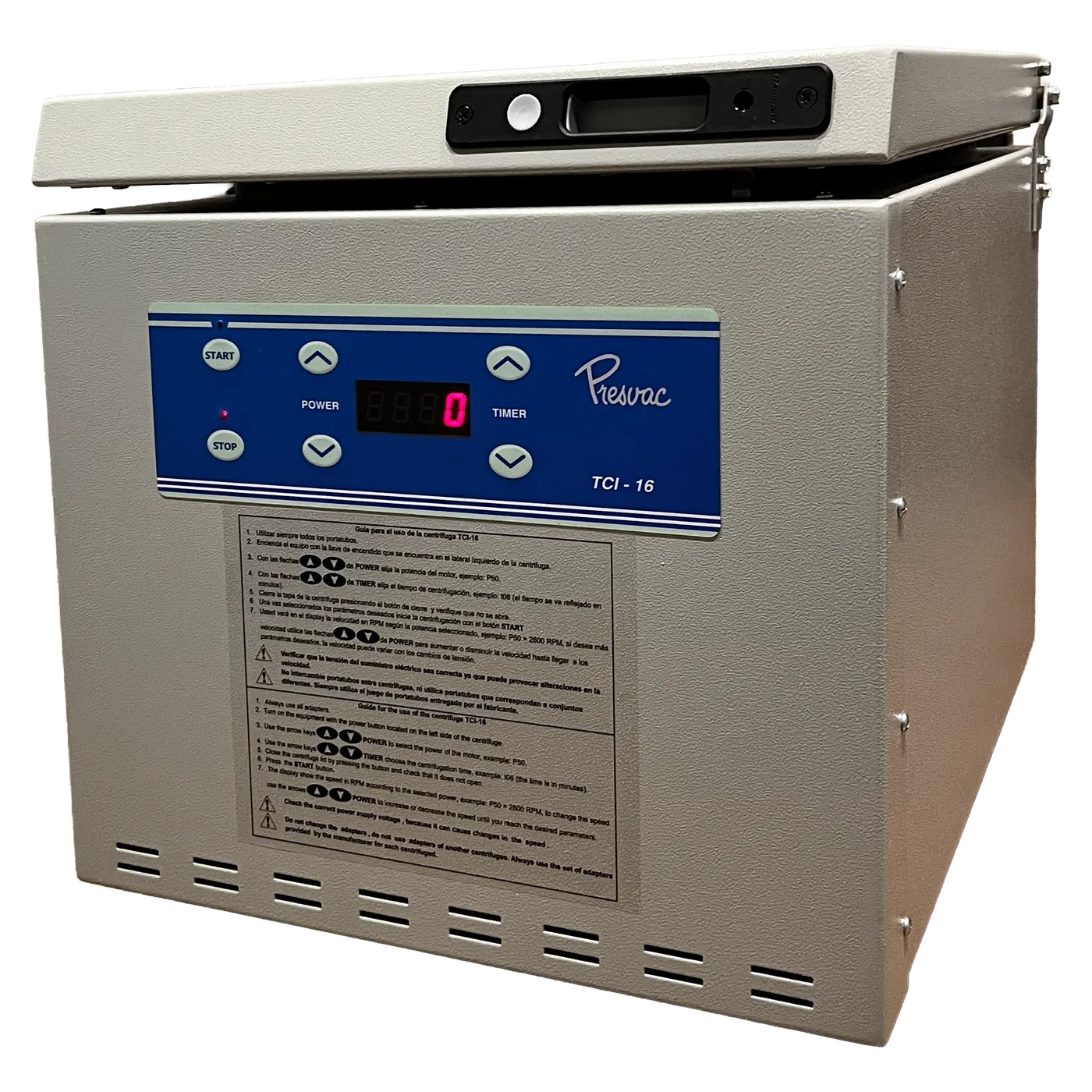
- The TCI-16 sits on rubber shock absorbers.
Note
Alarms protect the equipment and the operator, but they do not replace correct loading. Always balance before you start, and follow the manual of your centrifuge.
To learn how a centrifuge separates samples, read What is a centrifuge and how does it work?
Frequently asked questions
FAQ
Can I run a centrifuge with an odd number of tubes?
Yes. Add a balance tube with water of the same weight opposite the unpaired tube, or spread the tubes evenly when the rotor allows it, such as three tubes in a six-position rotor.
Should I balance by volume or by weight?
By weight. Equal volumes only balance when the tubes and the liquids are the same.
What happens if I run an unbalanced centrifuge?
The rotor vibrates, the motor and bearings wear faster, the rotor can be damaged and the separation may be poor. Centrifuges with imbalance detection warn you with an alarm.
Do I need a scale to balance blood bags?
Yes. Weighing each bucket with its bag and adapters is the reliable way to match opposite positions.
Do you provide installation and training?
Yes. Presvac installs the equipment, trains the users and helps plan preventive and corrective maintenance.